
Growing up too soon: Grace, a young carer in a Huntington’s family
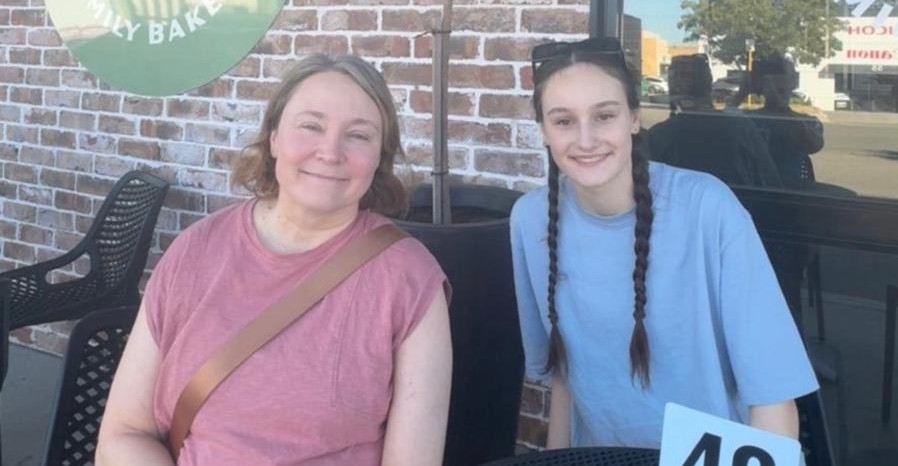
When speaking to Grace (17), it doesn’t take long to realise how much growing up she has had to do in her young life. She lives with her mum, Cathryn, who has Huntington’s disease.
As the symptoms have progressed, Grace has had to take on more caring responsibilities, from practical tasks incuding cooking and cleaning to more sensitive issues like reminding her mum about daily routines and providing emotional support when things become overwhelming.
It’s a lot for any young person, but for Grace it has simply become part of her day-to-day.
Research suggests that northern Scotland has one of the highest recorded rates of Huntington’s disease, with a prevalence of 14.5 cases per 100,000 people – over five times higher than the estimated worldwide rate. Another study confirmed that manifest Huntington’s in the region had reached 14.6 per 100,000 by 2020, indicating an upward trend in cases of this inherited disease.
The hereditary aspect compounds the challenges of coping with such a complex condition. It affects whole families and spans generations. And with each child of a person with Huntington’s disease at 50% risk of also inheriting the faulty gene that causes it, many young people are taking on a caring role while living with the uncertainty of knowing they may also develop the same disease.
Grace remembers her confusion when hearing for the first time about having Huntington’s in her family. Her mum didn’t have any symptoms, and she didn’t know her late grandmother, who also had the disease.
“Mum took me out to a restaurant to talk about it for the first time. I just felt awkward. I didn’t know how to express myself about it then,” said Grace.
It was three years later when Grace started to see changes. Social interactions were becoming more challenging for her mum, especially when she was feeling overwhelmed or things were unpredictable. There were also memory issues, emotional sensitivities, and difficulties coping with changes to routine.
As her mum’s symptoms increased, so did Grace’s caring role. She helps with cleaning around the house, cooking her mum’s favourite pasta meals, reminding her about personal care, and making sure important tasks are done, such as the weekly shop and paying bills.
“It’s always been similar tasks, like cooking,” she explained, “but now there’s more support with Mum’s emotions and trying to help keep her calm. That’s one thing that has become worse over the years.”
Such responsibilities had a huge impact on Grace’s teenage years in ways that most of her friends couldn’t understand.
“I felt a lot more grown up than my friends and I was dealing with things that they didn’t have to,” said Grace.
“I didn’t have any of my friends over after school because I was worried about what my mum would say to them or how they would react to her. I never really told them about Huntington’s disease.”
Having left school without qualifications, Grace feels now that having more parental guidance would have been a huge help, while living in a small, rural community only increased her feelings of isolation.
Which is why the opportunity to meet other young people impacted by Huntington’s disease – including at the Scottish Huntington’s Association annual summer camp – has been such a rewarding and positive experience.
“They just get it,” said Grace. “We walk into that camp and everyone understands Huntington’s. We don’t always talk about it but we can if we want to.”
Grace has also benefited from regular meetings with her local Scottish Huntington’s Association Specialist Youth Advisor.
“Having support through one-to-one sessions is great, it’s really helpful to have someone who helps me to better understand Mum’s symptoms and who is so positive, even when I’m feeling down. It helps me to cope.”
Make a Move for Huntington’s Disease
Across Scotland, families like Grace’s rely on the vital Huntington’s disease specialist services provided by Scottish Huntington’s Association. Getting involved in our Make a Move campaign is one of the simplest ways people can help.
Whether it’s starting conversations about Huntington’s disease, raising funds through a personal challenge, or promoting our work on social media, every action helps us reach more families impacted by Huntington’s disease.
By taking part, people can help ensure that young carers like Grace – and the adults they support – are never left to cope alone. Visit Make A Move to find out more.